Wednesday, January 2, 2019

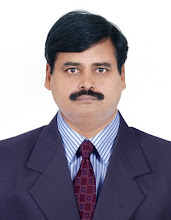
BRIEF PROFILE OF SELF

Dear All

Please find self brief Profile as:


Brief Profile of
N. Lakshmi Narayana, National Adviser, ILDC. New Delhi

          N. Lakshmi Narayana is the Mentor of Geo Rehabilitation Center, connecting the Government, National Institutes, NGO Sector, Corporate Sectors and Funding Agencies with priority for the model of Partnership.

          After completing his Master Degree in Earth Science, he worked with the Government of Gujarat (1983-85) and Government of India (1985-2003) for the search and management of natural resources which resulted in opening of several mines and allied industries covering parts of India.

          He strongly believes that education is the most powerful tool for empowerment and thus obtained Post Graduate Diplomas in: Energy & Environmental Management, Rural Development, Resettlement & Rehabilitation, NGO Management, Community Based Rehabilitation Planning & Management and Distance Education. 

          He left Government service in the year 2003.  From that time on wards, he is working to serve the needy individuals as an empowerment covering disability, education, youth empowerment, gender, rural development, entrepreneurship, management of natural resources, and other community developmental activities with better sustainability and quality.

         Some of the NGOs mentored by him have got projects and recognition at National and International levels and the process is going on to reach the targeted group who are poor and marginalized both socially and economically.  

         His services were recognized both Nationally and Globally. To his credit he published 148 Papers, presented 111 Papers at Seminars, submitted 97 Technical Reports and guided 17 Masters Dissertations.  He is the Guest Faculty / Resource Person / Mentor / Adviser at Government Departments, National Institutes, Universities, and NGOs.

          He is the Master Trainer in Project Management, Resources Mobilization, CSR, Life Skills and NGO Management. 

         Towards extracurricular activities, he has achieved excellent records in Mountaineering, NSS & NCC and is a qualified mountaineer. He also holds several honorary posts and is associated with several Scientific & Service Associations / Federations / Forums.

        Other recognition include:

ü  Biographer in “WHO`S WHO IN THE WORLD - 2001” - Published by Marquis, U.S.A.
ü  Biographer in “2000 OUTSTANDING SCIENTISTS OF THE 21st CENTURY”- published by International Biographical Center (IBC), Cambridge, England.
ü  Honorary Member of the Research Board of Advisers, The American Biographical Institute, USA. (Since 2005).
ü  Biographer in “2000 OUTSTANDING INTELLECTUALS OF THE 21st CENTURY - 2007” published by International Biographical Center (IBC), Cambridge, England.

         He has got the National Award 2017 of Rastriya Srijan Abhiyan, New Delhi and NGO Leadership Award 2017 of CSR World & World Sustainability, New Delhi. He is the National Adviser of International Leadership Development Council (ILDC) at National Level. 

With thanks and looking forward....

Saturday, October 27, 2018

PAPER PUBLISHED ON "LAND UTILIZATION WITH REHABILITATION & RESETTLEMENT FOR SUSTAINABLE DEVELOPMENT"

Dear All

During the period of Oct-Dec 2018, one paper on "LAND UTILIZATION WITH REHABILITATION & RESETTLEMENT FOR SUSTAINABLE DEVELOPMENT' has been published and brief details of the same were posted below as:

Initiatives
Author is very much connected with such processes for over three decades and has taken up several initiatives in this direction. Some of the key initiatives include:

  1. Awareness and Advocacy on the importance of Land and its utilities.
  2. Mapping of Soil, Land and Natural Resources by deploying Geotools.
  3. Suggestions and measures to protect the Land and other Natural Resources.
  4. Suggestions and measures to Farmers for better input supports, production, productivity, product making and marketing.
  5. Need to minimize the land for dumping of waste &other pollutants and ways to make product out of waste.  
  6. Selection of suitable site for dumping of wastes from Domestic, Industries, Mining,
  7. Use of technologies for effective transfer of knowledge / knowhow / learning’s from Lab to Land.
  8. Organizing of trainings, workshops, and seminars to various stakeholders.
  9. Documentation and its sharing & dissemination to several groups through various forums including e-forums. 
  10. Paper presentations and publication at various forums of National and International.

Conclusions
In view of increase in population and higher demand for land for various purposes, the present study has gained priority and conclusions emerged include:

  1. Land is one of the primary natural resources which supports and protects every activity of all living and non living things. It also supports for the production of several conventional and unconventional resources & energies.
  2. In the process of moving towards the achievement of Sustainable Developmental Goals (SDGs), the Land, the most precious natural resource gains priority to support people and environment. 
  3. Population, Land and Development are the cause and consequences of each other. Increase in population demands for more services and supports in the form of development which further puts more pressure on Land / Earth. Unfortunately there is no scope for the increase in Land.     
  4. Among land utilities, cropped land dominates other type of utilities.
  5. Every development essentially requires land for various purposes and some of them includes: water bodies, residential, agriculture, transport, recreation, community, industries, commercial, infrastructure, water based projects, power projects, mining, education, health care, waste dumping, forests, and all other man made activities.
  6. In general people are not against any developmental activity but expect that it should work for health and wealth of the People and Environment.
  7. It is up to the Authorities to convince the affected people with realties on the nature & type of project, processes, outputs, impact and benefits to the people.
  8. The shift from People Oriented Development (POD) to Business Oriented Development (BOD) demands more land and other related resources.
  9. The processes of Liberalization, Privatization and Globalization (LPG) covering both positive and negative aspects has to be accepted which certainly puts more pressure on land.
  10. In majority of the developmental projects whether it is POD or BOD, while utilizing the land and other resources, people and environment will get affected with various challenges.
  11. Some of the challenges with the land utilities include: erosion & shrink age, increase in wasteland, loss of fertility, demand for  RITCM (residential, industries, transport, commercial, mining & recreation), mining, dumping & pollution, increase in density, subsidence, infrastructural development, hazards & disasters, low production & productivity, land acquisition, and other consequences.
  12. All such challenges cumulatively results for loss of land & fertility, subsidence, poor food security, and others affecting the health and wealth of the people (particularly women) and environment.     
  13. These challenges of land utilities are alarming and the need of the hour is to look for better management as a solution.
  14. There exists several opportunities to minimize these challenges and to manage the land along with other resources for aching the vision and mission of the Nation.
  15. Some of the key opportunities includes land mapping, accessible database, allocation & management, acquisition – policies, resettlement & rehabilitation, social auditing, eco-friendly from product to disposal, use of natural resources, use of technologies, increase in the mode of PPP and PPNP, control on population, use of non-conventional energies, shift from BOD to POD and other need based matching to the dynamics of the given community & environment.
  16. To work with many of the opportunities, the Rehabilitation & Resettlement Act 2013 provides guidelines for the land utilizes and its acquisition & allocation for primarily People Oriented Development (POD).
  17. There is a need to shift from PPP to PPNP for better understanding of the local resources and utilities for better identification, assessment and allocation along with monitoring & evaluation from time to time. 
  18. CSR initiatives should work for the empowerment of the people both socially and economically.
  19. Social Auditing helps the Government, Investors and People for better accountability and transparency.
  20. Grievance mechanism will improve the confidence level of the People (especially women) and PAPs to accept and participate in the processes of the developmental projects.   
  21. The participation of NGOs / CSOs will support for the bottom up approaches with the people, for the people and by the people.
  22. The Quality of Life (QOL) of the PAPs and other affected people should be much better after displacement when compared to that of what they had before shift.
  23. The RR benefits should be attractive so that people & PAPs will come forward to be part of the developmental projects with ownership.
  24. The models and initiatives are simple, replicable, scalable, reliable and sustainable and flexible matching to the dynamics of the given environment.

Recommendations
The study made has gained priority and to move forward the following recommendations were made as:

  1. Better mapping of Land and its Utilities with accessible & affordable Database.
  2. Awareness cum Advocacy to share and disseminate the details of the Developmental Projects, outputs, impact, benefits and challenges.
  3. Encourage Students for Projects Works and Research on outputs / impact of Developmental Projects and Rehabilitation & Resettlement.
  4. Better use of Geotools, E-Technologies, GIS, and Geotagging with better Visibility, Security and Resolution.
  5. Encourage Community Initiatives with better participation and ownership with preparedness for Risk Reduction.
Support NGOs to work with the processes of Rehabilitation and Resettlement on Partnership with Government and Private (PPNP).   
..................................................................................
Looking forward .....

With thanks 


Wednesday, September 26, 2018

PAPER ENTITLED "MODERN CIVILIZATION - OPPORTUNITIES FOR COMMUNITY EMPOWERMENT" in Asia Journal of Professional Ethics & Management

Dear All

Continued the process of publications in  various journals and happy to inform you all that recently a paper entitled "MODERN CIVILIZATION - OPPORTUNITIES FOR COMMUNITY EMPOWERMENT" has been published in Asia Journal  of Professional Ethics & Management in the issue of July Sept 2018. 

The tile page of the journal and Abstract of the paper have been pasted below as: 


The recommendations made for further continuation include: 

1)  To create Awareness in an Advocacy mode on the ways to retain systems, values, culture, tradition and wellbeing in view of transformation of civilization from time to time.
2)    To use the geotools for the mapping and identification of natural resources which are valuable and precious and utilize them only for the people oriented development with better protection measures.
3)  To encourage students of all disciplines for taking up project works and research studies for better understanding of what it was and what it should be with systems and values.
4)   To support for effective and efficient service delivery systems with the use of technologies to reach the unreached with equality and respect as a right.  
5)    To support Schools, Colleges and Universities for preparing need based syllabus and to conduct workshops & seminars with relevance to the modern technologies and dynamics of the people and communities.
6)  To support NGOs to work with Government, and Private on partnership basis with better scope for ownership to the communities & people.

Looking forward 

With thanks 

Saturday, September 15, 2018

SWATCHH BHARAT MISSION - WATER AND SANITATION FOR ALL – ROLE OF CIVIL SOCIETY ORGANIZATIONS

Dear All

In continuation, published another paper during this month entitled "SWATCHH BHARAT MISSION - WATER AND SANITATION FOR ALL – ROLE OF CIVIL SOCIETY ORGANIZATIONS". Dream India New India. Vol. 3. Aug-Sept 2018. Rashtra Srijan Abhiyan, New Delhi.

The details are: 


The Recommendations made includes:

Recommendations

In view of the severity and priority, the study needs to be continued with innovation and creativity and the recommendations made include:

  1. To support for the development of IEC Material with innovation and creativity with better utility by the consumers and community with localization.
  2. To support and encourage students to work with community and take up research studies with better practical approaches.
  3. To support and encourage the local bodies and communities to develop community initiatives with innovation and creativity.
  4. To support and encourage Educational Institutes and other Research Institutes to develop new strategies and models as a solution with better efficiency.
  5. To support CSOs to work with Government and Private on partnership basis at all the levels with effective monitoring and evolution strategies and be part of Vision India or Dream India.
  6. To support and encourage entrepreneurs for the development of technologies for better mapping, implementation, utility and monitoring.  

Looking forward...

With thanks 

WATER - LAB TO LAND FOR HEALTHY ENVIRONMENTS IN MAHILA PRATISHTHA IN SPET 2018

Dear All

Happy to inform you all that recently published a paper entitled WATER - LAB TO LAND FOR HEALTHY ENVIRONMENTS in the Journal of MAHILA PRATISHTHA (Approved by UGC) in the issue of Sept  2018 and the details includes:


Recommendations

Based on the challenges and opportunities connected with water resources, it is necessary to continue the study and some of the recommendation made include:

1)      To organize more and more awareness cum advocacy programmes to reach the larger population with facts, challenges and remedies.
2)      To orient youth and communities for taking up the work of managing the water resources from identification to recycle to disposal.
3)      To encourage and support students to take up project works and research studies with more relevance to the grass roots realities.
4)      To support for the development of technologies and effective transfer of the same from Lab to Land.
5)      To encourage and prepare the communities to face hazards and disasters with effective Disaster Risk Reduction. 
6)      To support Civil Society Organizations to work with Government and Private / Corporate (CSR) on partnership basis with the model of DIME.  

Looking forward..

With thanks 

Tuesday, August 28, 2018

PAPER PUBLISHED ON "POPULATION Vs RESOURCES - OPPORTUNITIES FOR INCLUSIVE DEVELOPMENT

Dear All

Continued the process of publication and present paper ...Population Vs Resources - Opportunities for Inclusive Development...has been published in International Multidisciplinary E Journal  in the month of August 2018. 

The salient features and details of the same paper were posted below as:
...................................................................................................
ABSTRACT

Population, Resources and Development are the cause and consequence of each other. Increase in population puts more demand for the resources and services and affects the sustainability of the development. The service delivery systems do influence the distribution of resources over the region and people. The increase in population from 2001 to 2011 is much significant and do not expect corresponding increase in resources in fact they get reduced both quantitatively and qualitatively. The population density is much higher compared to that of average population density of world. The shortage in resources, mad rush towards business oriented development, and luxury living affects the availability Vs demand Vs supply of resources and higher wastage results for several challenges with marginalization and isolation.  The search for better solutions emerged for several opportunities which work for healthy development of the people and environments with better ownership to the local people and communities. The community initiatives and best practices adopted have resulted for better outputs and are simple, replicable, scalable and sustainable matching to the dynamics of the given environment.     

Key Words: Population, Resources, Development, Opportunities, Access, Sustainability, Inclusion, Environments.

Statement of the Problem

The increase in population and shift towards business oriented development demands more resources, services and supports which affects the mission of FOOD for ALL, ACCESS for ALL with poor Quality of Life. 

Recommendations

Based on need and dynamics of the population, resources and development with the targets of the Nation, recommendations made includes:

  1. Support for Mapping and development of data base with better access with the support of tools & technologies.
  2. Encourage Students for Project and Research works in association with the community.
  3. Efforts should be made to control the population with healthy population density with optimization of resources and development.
  4. Encourage Non Governmental Organizations to work with the Government and Private on partnership basis for better sharing and distribution of benefits of development over the region and people.
  5. Encourage for social auditing with better participation, accountability, responsibility & transparency with ownership.  
.......................................................................

Some of the working models:


Looking forward and will be happy to share more if necessary...

All the best. 

Sunday, July 29, 2018

PHOTO VIEW OF THE SERVICES OF SIRISHA REHABILITATION CENTER

Dear All

Please see the photo view of some of teh services extended to teh Children with Intellectual and Developmental Disabilities as:


 I am happy to b part of this NGO and looking forward...

With thanks